Riot Artists
Maryna Krut
About
The Russian invasion of Ukraine transformed Maryna Krut from being a performer updating a beautiful tradition of music to being a witness testifying to people around the world about the devastating war in her homeland.
These days, the 30-year-old musician leads a double life. From her temporary home in the west of Ukraine, she travels to the front lines of the war to perform for soldiers. And she also travels abroad to perform, relating what she has seen—and thanking audiences for their support of the Ukrainian people.
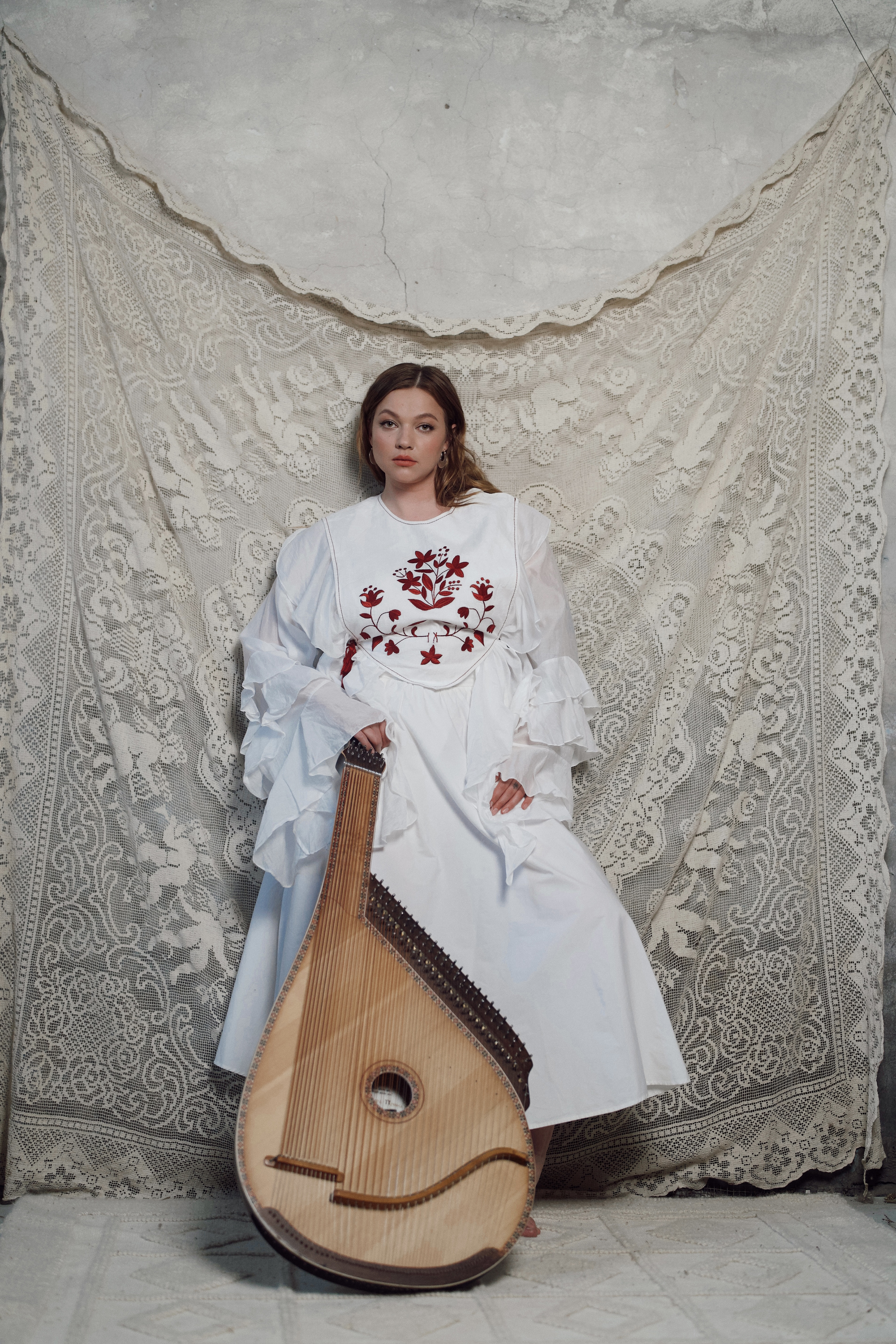
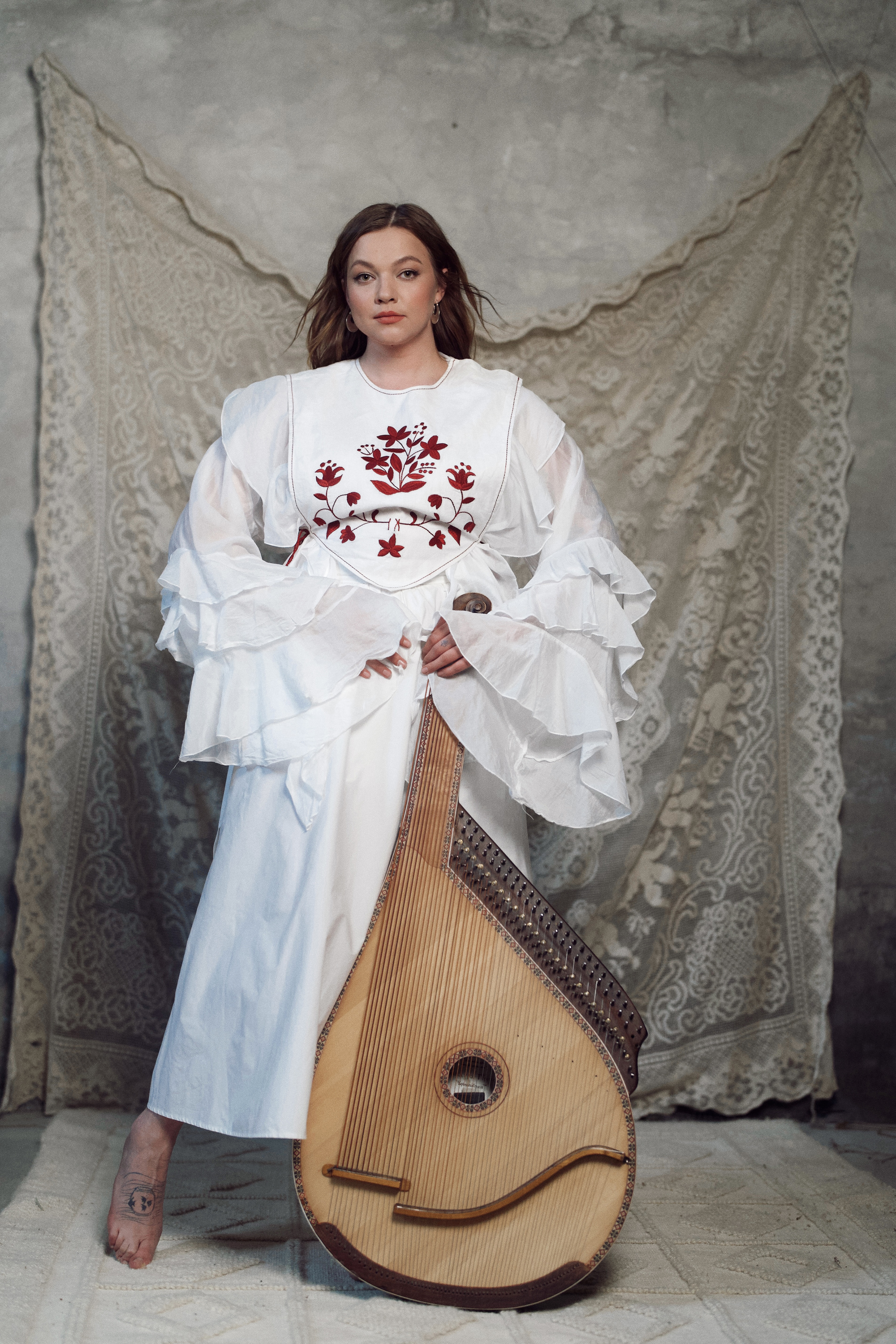
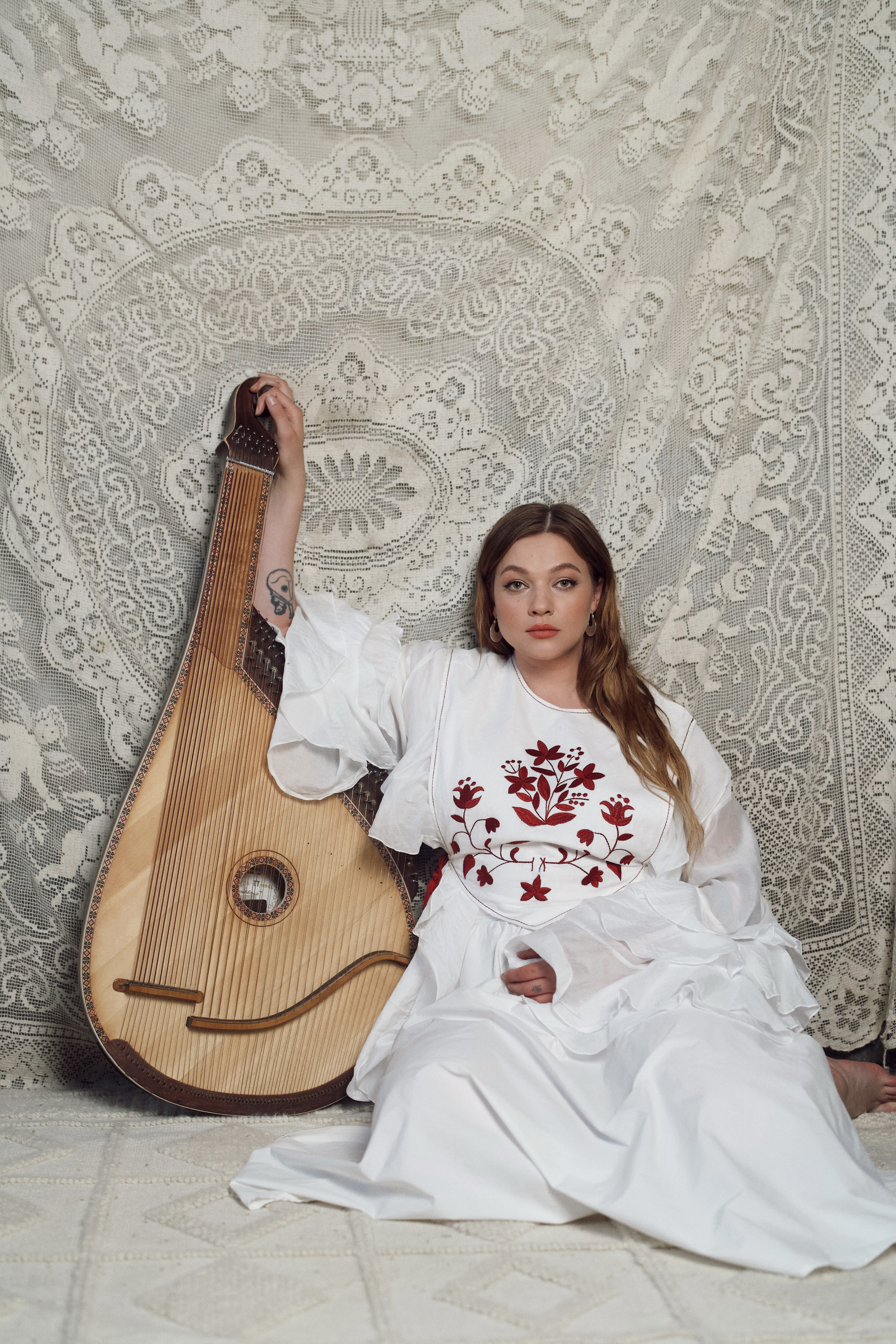
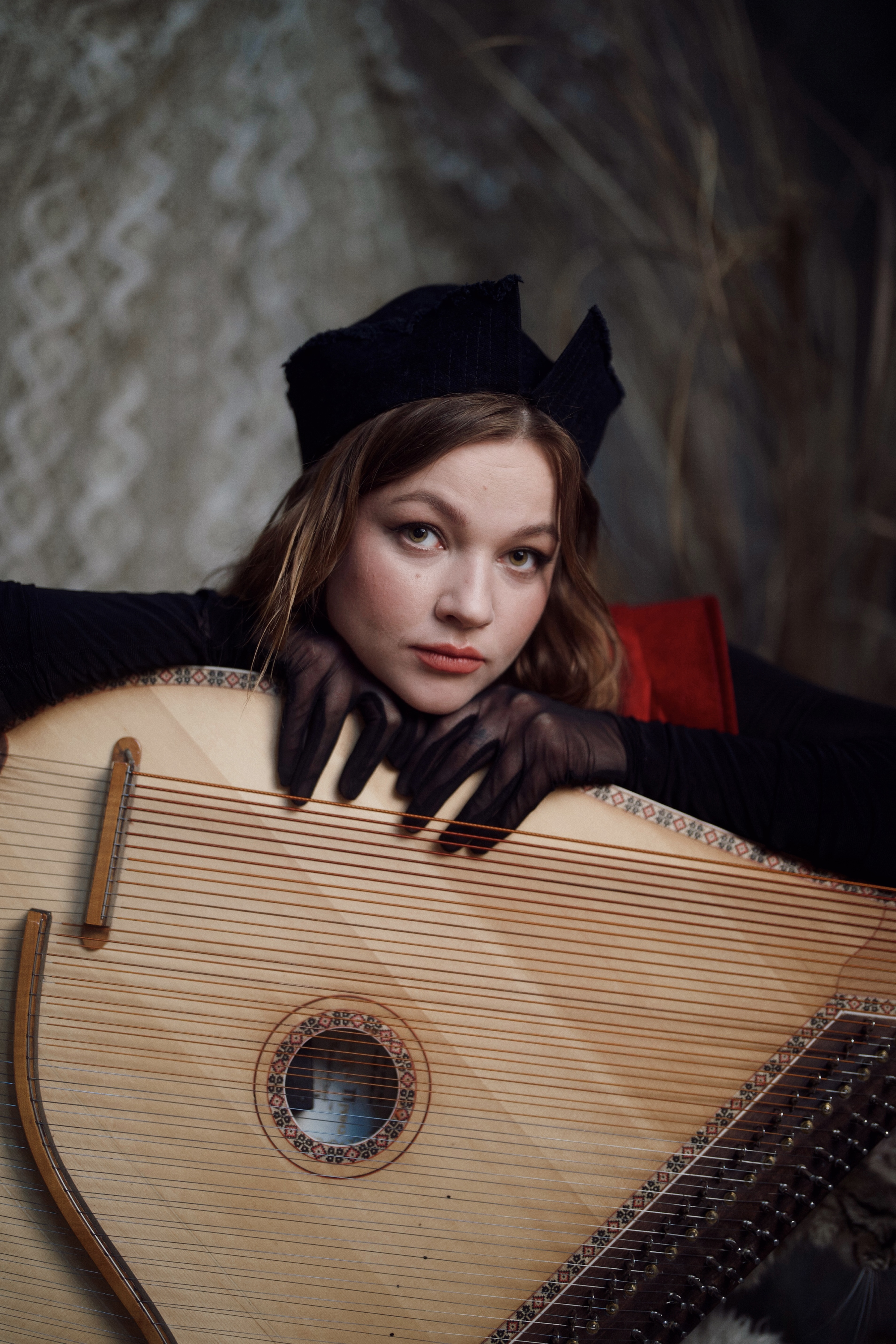
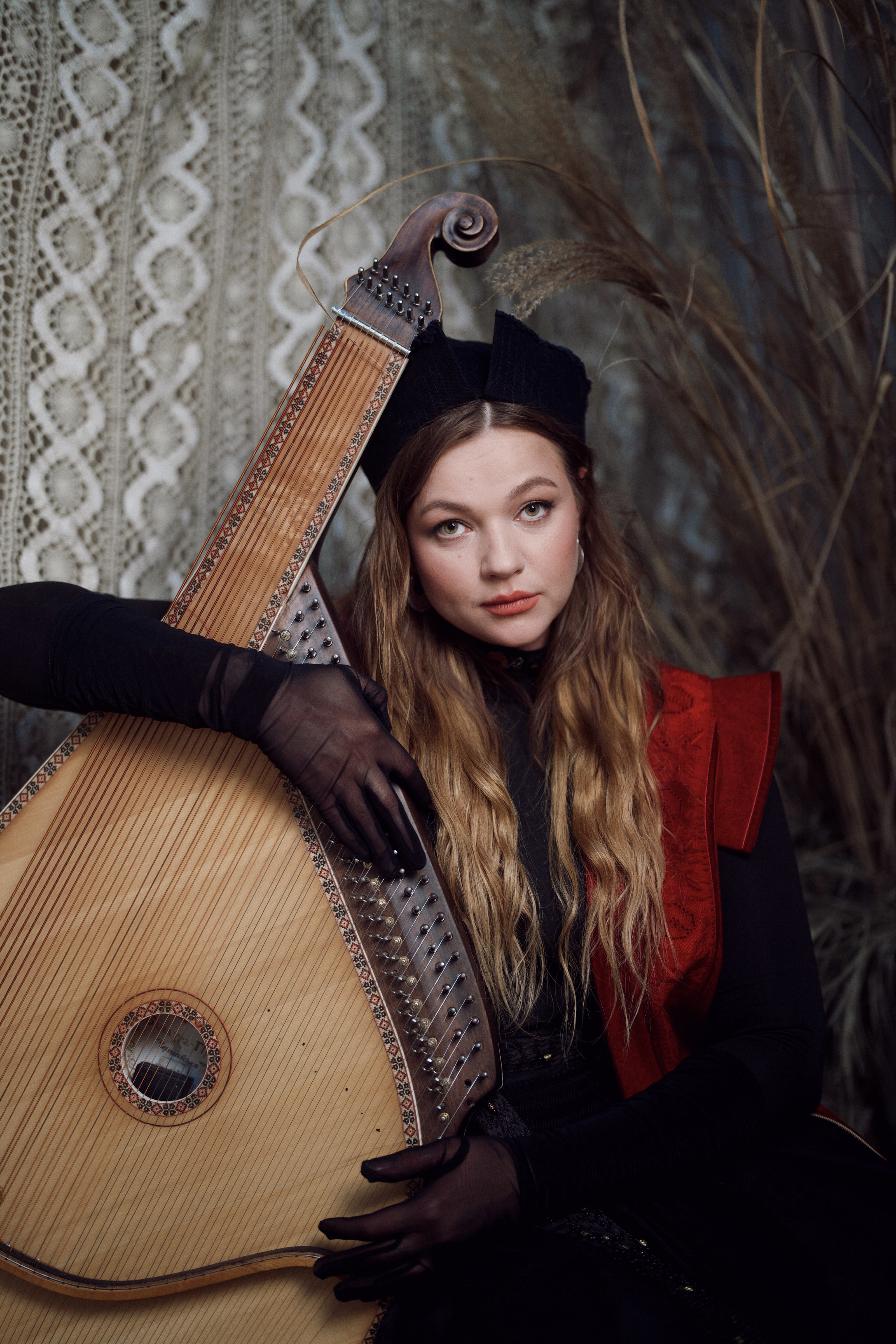
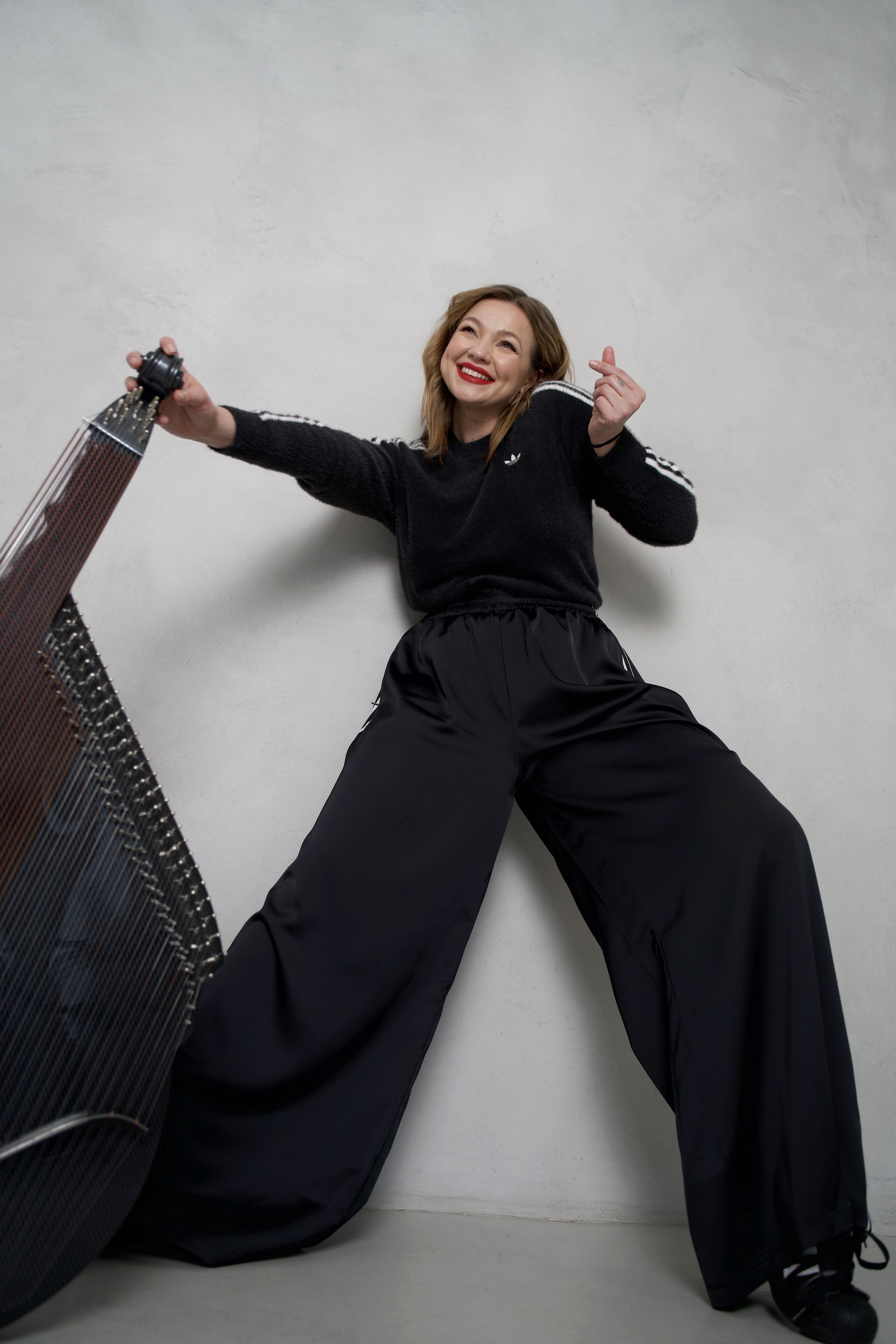
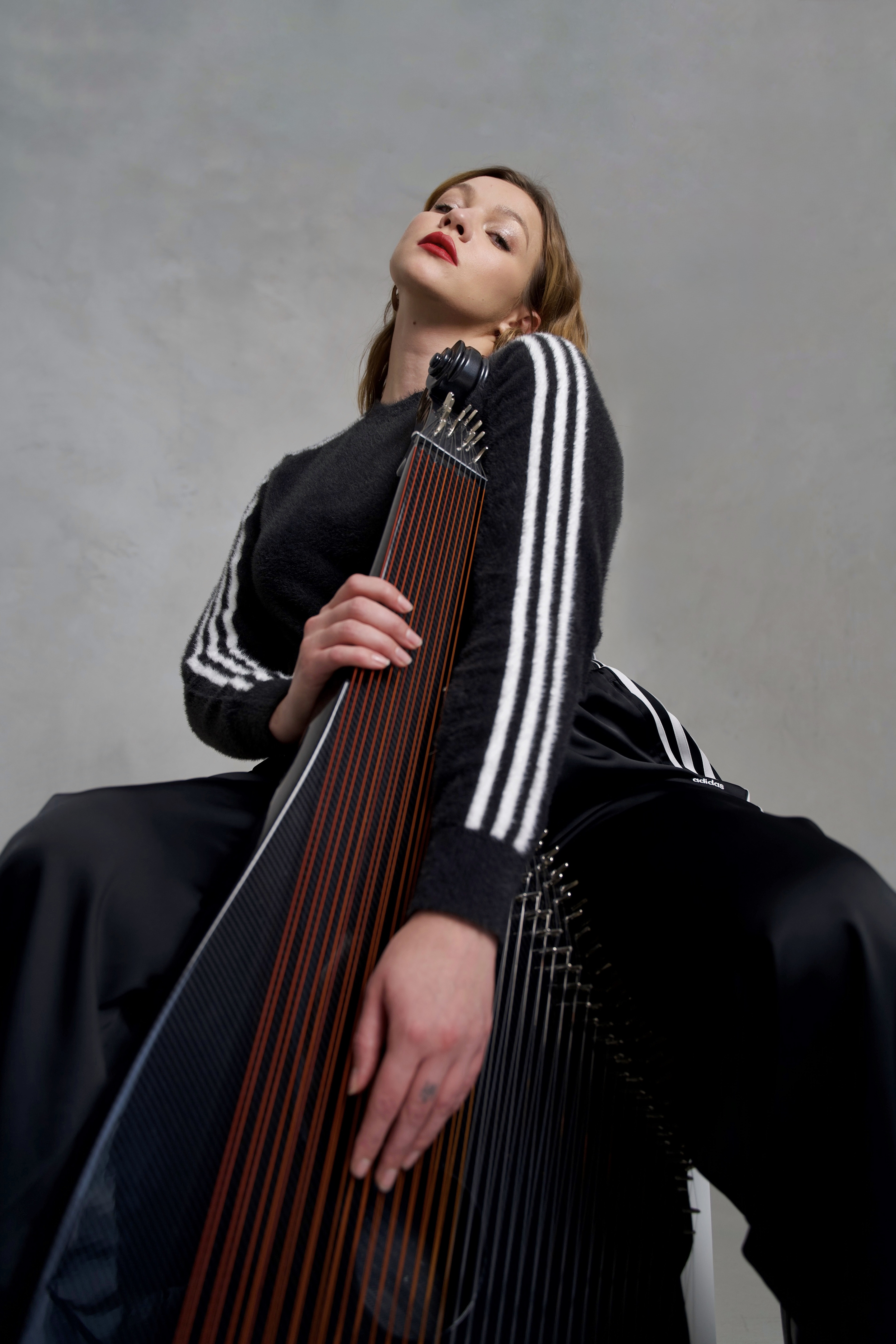
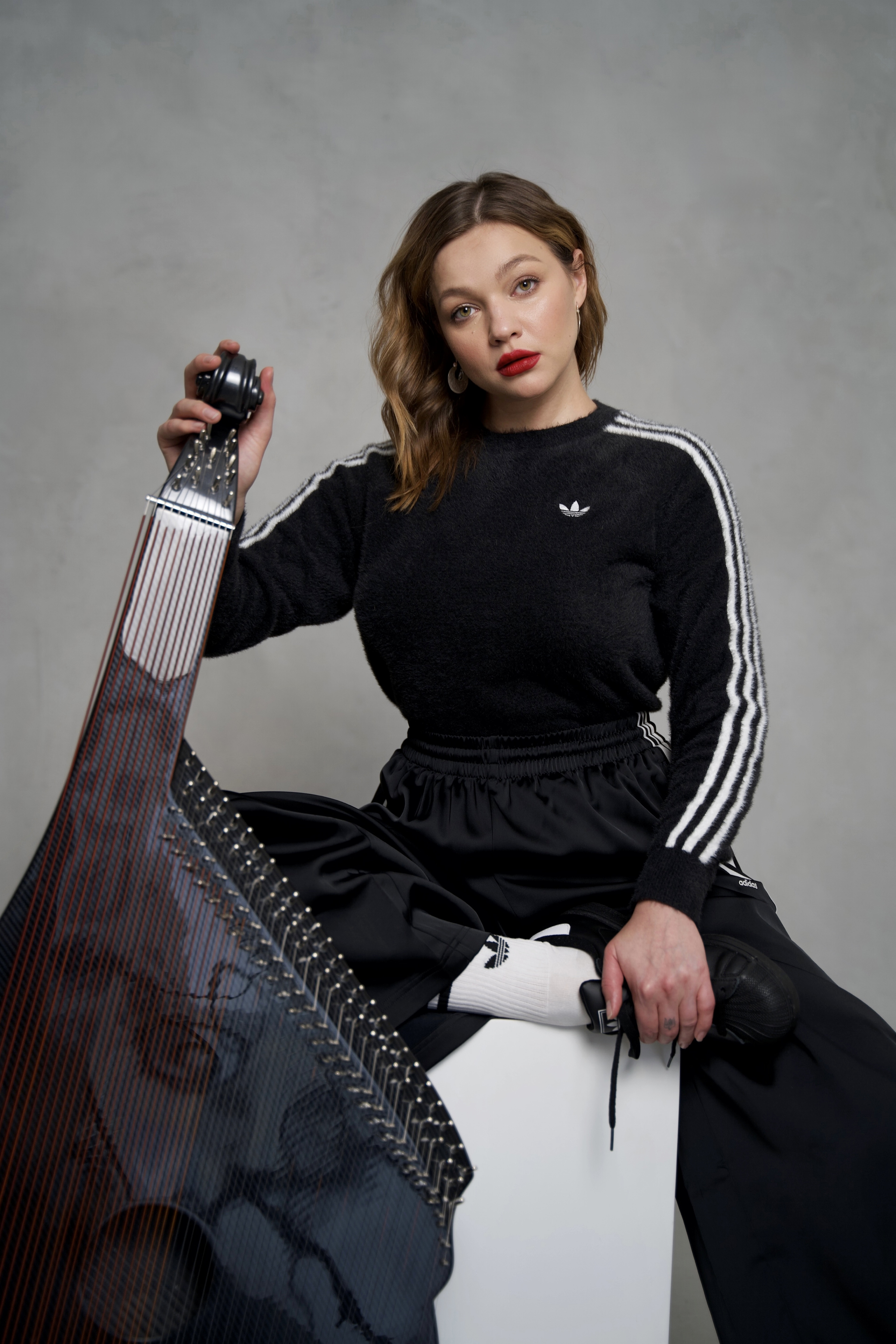
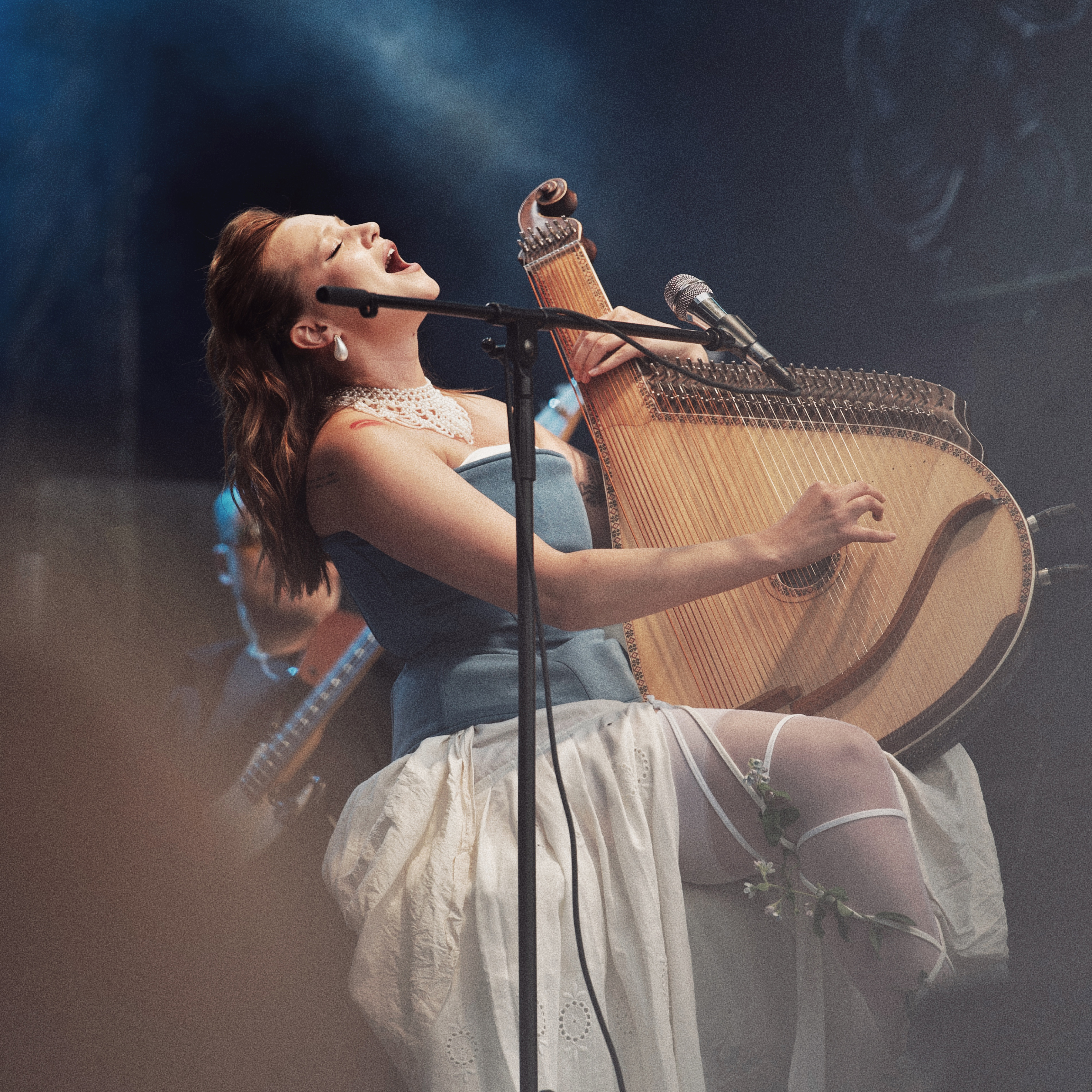
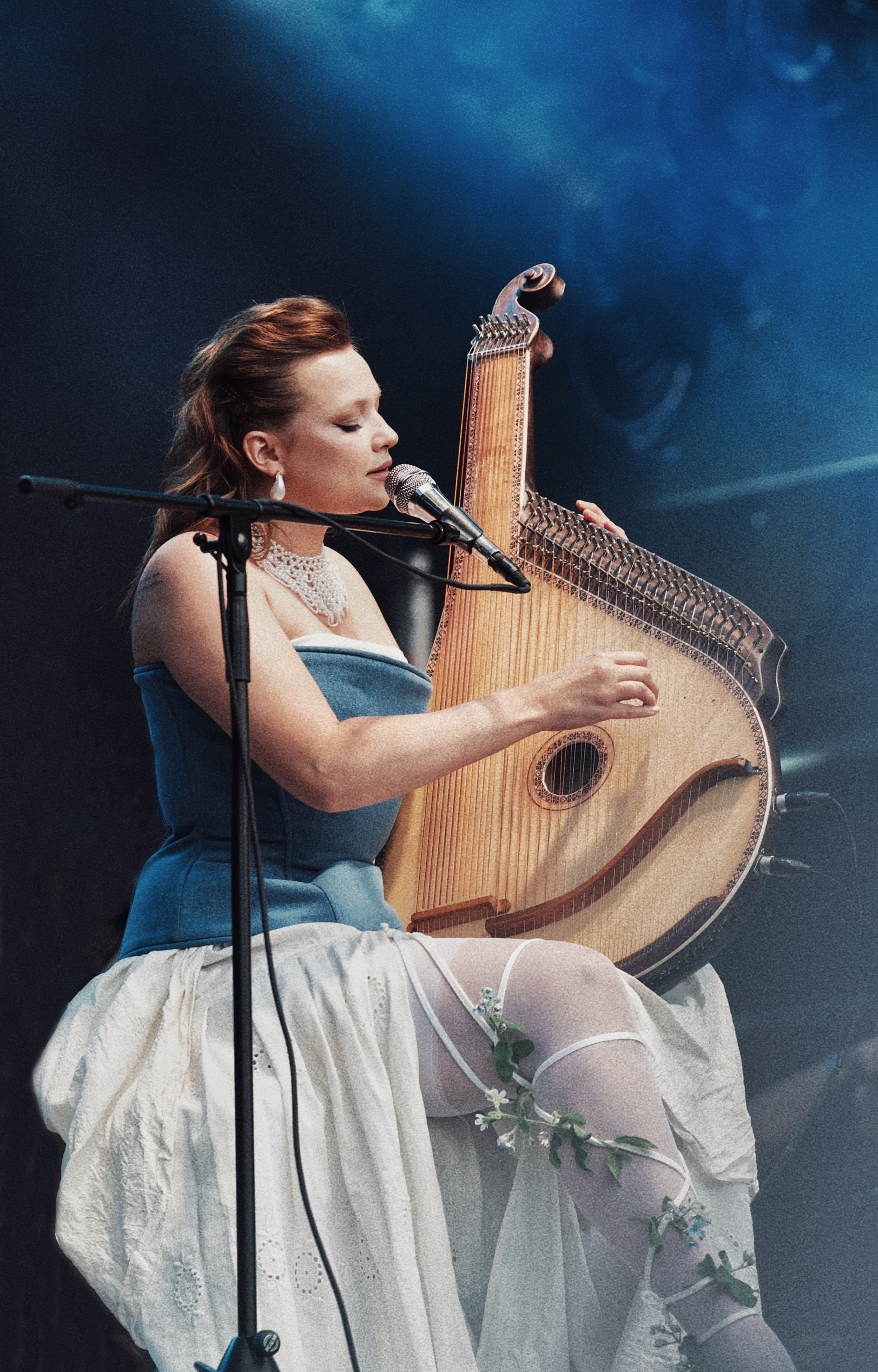
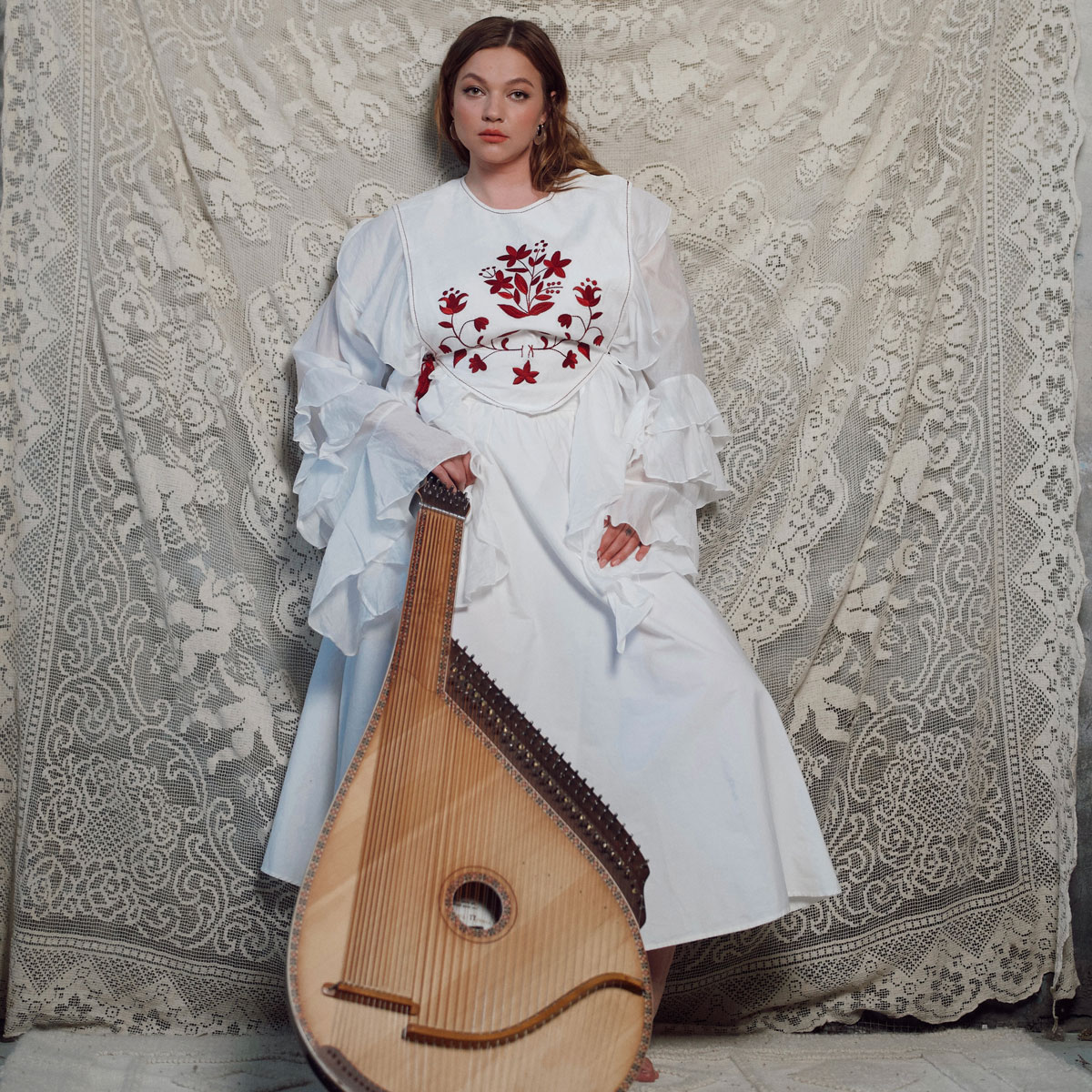
Maryna plays the bandura, a Ukrainian string instrument that looks like a cross between a lute and a zither. Steeped as a child in her country’s traditional music, she now incorporates some non-traditional elements into her playing, principally jazz, using it both as a solo instrument and to accompany her powerful singing.
In Ukraine, she gained a national following after appearances on that country’s versions of “The X Factor” and “The Voice” as well as placing in Eurovision. Now she is expanding her audience as she brings the story and culture of Ukraine to the world.
Artist Links: Facebook | YouTube | Instagram
Areas of Representation: The Americas, Asia, UK
Biography
The Russian invasion of Ukraine transformed Maryna Krut from being a performer updating a beautiful tradition of music to being a witness testifying to people around the world about the devastating war in her homeland.
These days, the 30-year-old musician leads a double life. From her temporary home in the west of Ukraine, she travels to the front lines of the war to perform for soldiers. And she also travels abroad to perform, relating what she has seen—and thanking audiences for their support of the Ukrainian people.
“Before I was like an indie-folk girl who tried to be a star in Ukraine—without a mission, without history, without nothing,” Maryna said. “But after the invasion, everything changed, because I was the same girl, but with a mission. You don’t have any choice when a lot of your very close friends are trying to save your country. You need to be a voice for your country, telling the true story, being a witness of the war.”
“I feel a lot of anxiety,” Maryna said. “When I wake up in the morning, one of the first things I do is to read the news. When you go to the bed, you’re not confident that your mom will survive. So I check the news, and if something happened, I call my mom and my friends. And when I finish my concerts, I go home. There are a lot of great people right now fighting, because if they don’t, Russians will come to our country and kill all musicians, all government people, men, women, and I think I might be on those lists too.”
Maryna plays the bandura, a Ukrainian string instrument that looks like a cross between a lute and a zither. Seven-year-old Maryna fell in love with the instrument’s sound and began to take lessons after seeing someone playing the bandura at a summer festival. She studied at a music school for children for seven years, and then continued with four years at a musical college, all the while participating in music competitions around the country.
She began to incorporate non-traditional elements into her bandura playing, principally jazz that she began to listen to from an MP3 player she was given. Before she finished her college studies, she stopped to concentrate on writing her own compositions. After going to China for a year, she returned to Ukraine and relocated to Kyiv, the Ukrainian capital, where she had a handful of personal connections she hoped would help boost her career.
“My strategy was to say yes to everything,” she recalled, playing in cafes, clubs and pubs. In 2017, she jumped to a national audience on the Ukrainian version of “The X Factor.” Then in 2019, she gained more pop renown on the country’s version of “The Voice,” singing Queen’s “Bohemian Rhapsody.”
In 2020, Maryna placed second in the Ukrainian final for the Eurovision international song competition with her song “99.” The song’s message was of resiliency, pointing toward ninety-nine reasons to rise above hard times.
When you’re lost and your hope is gone
Wipe your tears, put your fear away
When Russia invaded Ukraine on February 24th, 2022, Maryna was living and working in Kyiv.
“When we first heard explosions,” she recalled, “we decided to move back to my hometown, Khmelnytskyi, with some of my friends and spent almost 15 hours driving home.”
After being home for a few weeks as the war raged in the east, she approached the Regional Philharmonic Symphony Orchestra and asked if they wanted to collaborate. They chose her 2019 song, “Tell me, God,” a song originally about personal loss that had new meaning after the invasion.
And in a moment I lost everything that I loved
and with whom I shared an eternity.
But you went behind and whispered in my ear:
Love suffers long, love does not pass and does not leave.
Tell me, God, why do I have to go this way?
While the song was well-received as a source of inspiration on social media, its creation was not initially so simple.
“We needed to have some moral permission,” Maryna said. “A lot of musicians said, ‘No, we can’t play music right now in these difficult times.’ But in the same way, there was this very big feeling that we need music. Because when you stop playing the music, especially if you are a musician, you just die. So I said to them, ‘OK, if you need permission, I will get it.’ I called my friends in the government, and said ‘Can you call the Philharmonic and tell them they should do something?’”
In the end dozens of people participated, including musicians and a film crew.
“Everything was for free, nobody wanted any money,” Maryna said. “It was just because everybody wanted to create something.”
In 2023 Maryna made it into the national finals of the Eurovision song competition and took second place with “Kolyskova (Lullaby).” The song begins with a classic Ukrainian lullaby and moves into her original lyrics, telling a poignant song about a mother comforting her child at bedtime as the war rages in the distance.
The beasts are in a fierce battle
The night will come and also pass
Daddy will chase away the beasts
And you, sleep, sleep, sleep
I will paint you dreams
Sleep, sleep, sleep
Dad guards the steppes
It’s not the moon, but a fire
Those are not beasts, they are enemies
We are not afraid of predators
Inside us is the will and a song
After several months in Khmelnytskyi, she moved to Lviv in the far west of Ukraine so she could stay in her home country, visit the troops, but also get out to perform in other countries. As she has developed her career abroad as a bandura soloist and singer, she has continued to perform her more-contemporary songs for her loyal Ukrainian fans.
When Maryna performs for the troops along the front lines, though, she does not approach it like a typical concert.
“I go onto the stage without a song list,” she said. “I look in the soldiers’ eyes and try to understand what they need right now, what I want to tell them right now. I play everything that’s going to support them.”
In the spring of 2024, the war reached into Maryna’s innermost circle with the death of her friend Iryna Tsybukh, a journalist and combat medic, and she honored her memory by helping to bring together thousands of Ukrainians to remember her.
“When she was on her rotation near Donbass, she wrote me a very long message,” Maryna said. “And she said, ‘Maryna, when I die, you need to do this, this and this.’ And of course I said, ‘Please don’t do that. Just come back home.’ But she died on May 29th. And I remembered about the message and I did everything that she wrote to me. She said, ‘You need to choose ten Ukrainian, very cool songs. You need to sing all these 10 songs together.’ And then we did.”
Thousands attended the funeral in Lviv, wearing combat fatigues or a traditional embroidered shirt, the vyshyvanka, as Tsybukh requested. They drank tea, gathered around a bonfire and sang together in an effort to follow Tsybukh’s wish for Ukrainians to take a less-formal approach to honoring the war dead and finding their resolve together as a nation.
As a remembrance of Tsybukh, Maryna said, she took the last string off her 65-string instrument and placed it in the grave alongside her friend as a metaphor, “because my soul lost one string.”
Maryna’s instrument, the bandura, has a long and singular history in Ukraine. When Maryna first heard the instrument’s sweet plucked strings, she had no idea of the bandura’s role in social justice and the persecution of its early players.
The bandura’s predecessor – the kobza, was long associated with itinerant blind musicians called Kobzars. The tradition of singing with the kobza developed in parallel as the Kozaks – freedom fighters for liberating Ukrainian lands from the Ottomans, Russians, and the Polish-Lithuanian Commonwealth. The Kobzars’ songs praised national heroes, and taught morals based on the Eastern Orthodox Church.
With origins as far back as the 1500s, Kobzars in the 1800s were predominantly blind men unable to do farm work who were taught music through apprenticeships. Under Tsarist and Soviet rule, bandura players—along with others promoting Ukrainian culture or calling attention to social injustice—were often oppressed, arrested, sent to die in the gulags, or murdered. Even today, in the Russia-occupied regions of Ukraine, bandurists hide their instruments for fear that Russian soldiers would target them.
Recognizing the power of her instrument, Maryna uses it to counter the Russian colonial narrative and uplift the spirits of the modern “Kozaks,” as many call Ukrainian soldiers today.
“After the invasion, people are trying to find their own history, and trying to find the existential reason why they need to fight and why they need to be Ukrainian,” Maryna said. “Especially musicians, we are trying to find our history. First, when you think about the instrument, you just love the sound. But after you understand the history, after you understand why this is Ukrainian, you see why this instrument is so special.”
Maryna plays a 55-year-old Chernihiv-style bandura, called that because it was built at a musical instrument factory in the city of Chernihiv. With the development of new types of banduras, new techniques of playing the instrument appeared. Maryna, however, has also developed her own additional methods of playing, such as lightly muting the strings with her legs to change their sound.
Maryna plans to release a solo live album at the end of 2024, she said, and wants to put together an album with an orchestra in 2025. In addition, her intention is to continue reaching audiences outside Ukraine.
“But I’m here not for myself,” Maryna said. “I’m here for my friends who are on the front lines. I’m here for people who can’t speak right now because they’re dead. You need to be the voice.”
Marty Lipp
Iryna Voloshyna
2024
Videos
October 2023, Galicia, Spain
Concert in Kyiv 2023
2nd clip
Concert from a Lviv Bomb Shelter 2022
News
- Maryna Krut Shares Universal Message of Hope and Peace
 CTV reporter Sarah Plowman has the story of how Ukrainian musician Maryna Krut is hoping her music will inspire a universal message of hope and peace.
Press
“Not only is she a virtuoso on her 65-string harp, but she has a voice from the heavens, covering all the colors of the human vocal rainbow, seemingly effortlessly.” Banning Eyre – AFROPOP
2023 Article – Rolling Stone Australia
2023 Article in French – Ouest France
2022 Article in Ukrainian – Vogue UA
Testimonials
“Such virtuosity! Such a voice! Such presence, even though she was alone on stage. Disarmingly authentic. I had a wonderful evening and was deeply moved.”
— Mylène Isabelle, Director of Programming at Théâtre de la Ville, Longueil, Québec, Canada
“Every year, Lotus presents an artist who becomes the festival fan favorite, as word of their talent spreads. At Lotus Festival 2024, that artist was Maryna Krut. Maryna has a voice of ethereal quality with a range that makes you shiver and a command of her instrument that makes you marvel at its beauty and her power on stage. Maryna’s passion for sharing the music of her native Ukraine, from delicate to bold to the most nuanced phrase, brings you in and keeps you on the edge of your seat. From a full house on her first night at the festival to standing-room-only on her second night; from the standing ovation she received as she walked on stage on her second night; from the two encores she received after this performance (at a festival that doesn’t “do” encores) – it’s clear that in Maryna, we have an artist of incredible talent and charisma who will be winning new fans wherever she goes.”
— Tamara Loewenthal, Artistic Director, Lotus World Music and Arts Festival, Bloomington, IN USA
“Maryna’s performance was utterly captivating at The Cedar – goosebumps resonate thinking of her impassioned, beautiful voice and virtuosic bandura playing telling the story of her Ukraine with full heart and soul.”
— Mary Brabec, Booking Director, Cedar Cultural Center, Minneapolis, MN USA
“We just finished a short residency with Maryna Krut that was rewarding and fun. Maryna performed twice and did two workshops/Q&A’s, where she was engaging and led great discussions, performing music and fielding questions from the audience. When someone asked how the bandura worked, she went into a lengthy and fascinating breakdown of its intricacies. It was interesting to see her step up her performance when she got to play in a larger theater with better tech and a bigger audience. You can see she is used to playing in large theaters in Ukraine and she really bumped up the intensity of the performance.”
— Neal Copperman, AMP Concerts, Albuquerque, NM USA
“Maryna Krut possesses a rare combination of passion, grace, and extraordinary musicianship. Her playing is masterful, creative, and even playful; her voice commands attention like a powerful siren, then shifts smoothly to delicate, lilting phrases that carry you gently along. And the stories she tells through song–both traditional and contemporary, including her own compositions and spoken word–communicate her love of her country, the richness of its culture, and the continuing need for peace. To witness her performance is to be inspired, as much by her music as by her message.”
— Suzanne Ryan Melamed, President & CEO, Bloomington Early Music, Bloomington, IN, USA